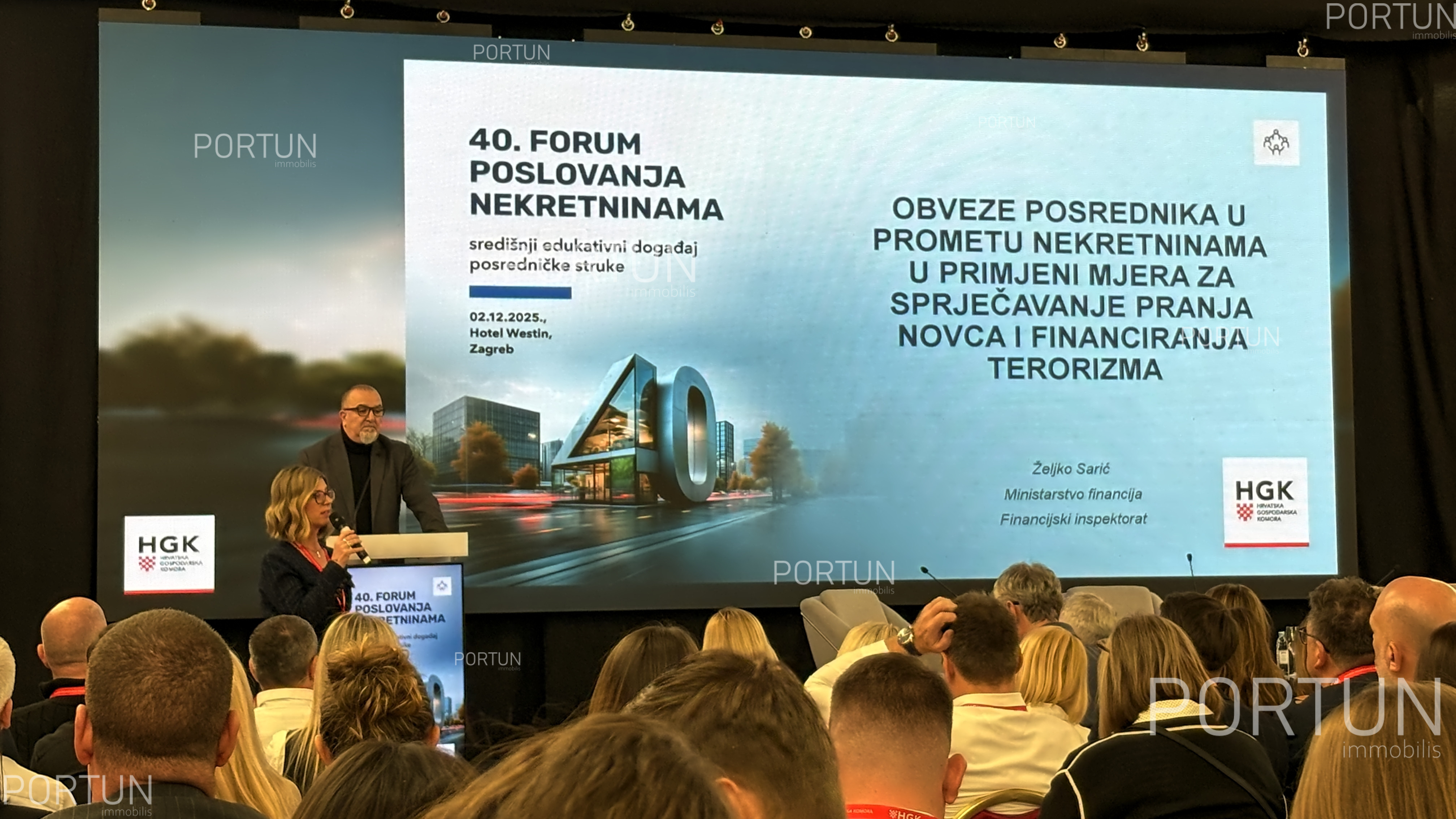
The Real Estate Market at a Turning Point
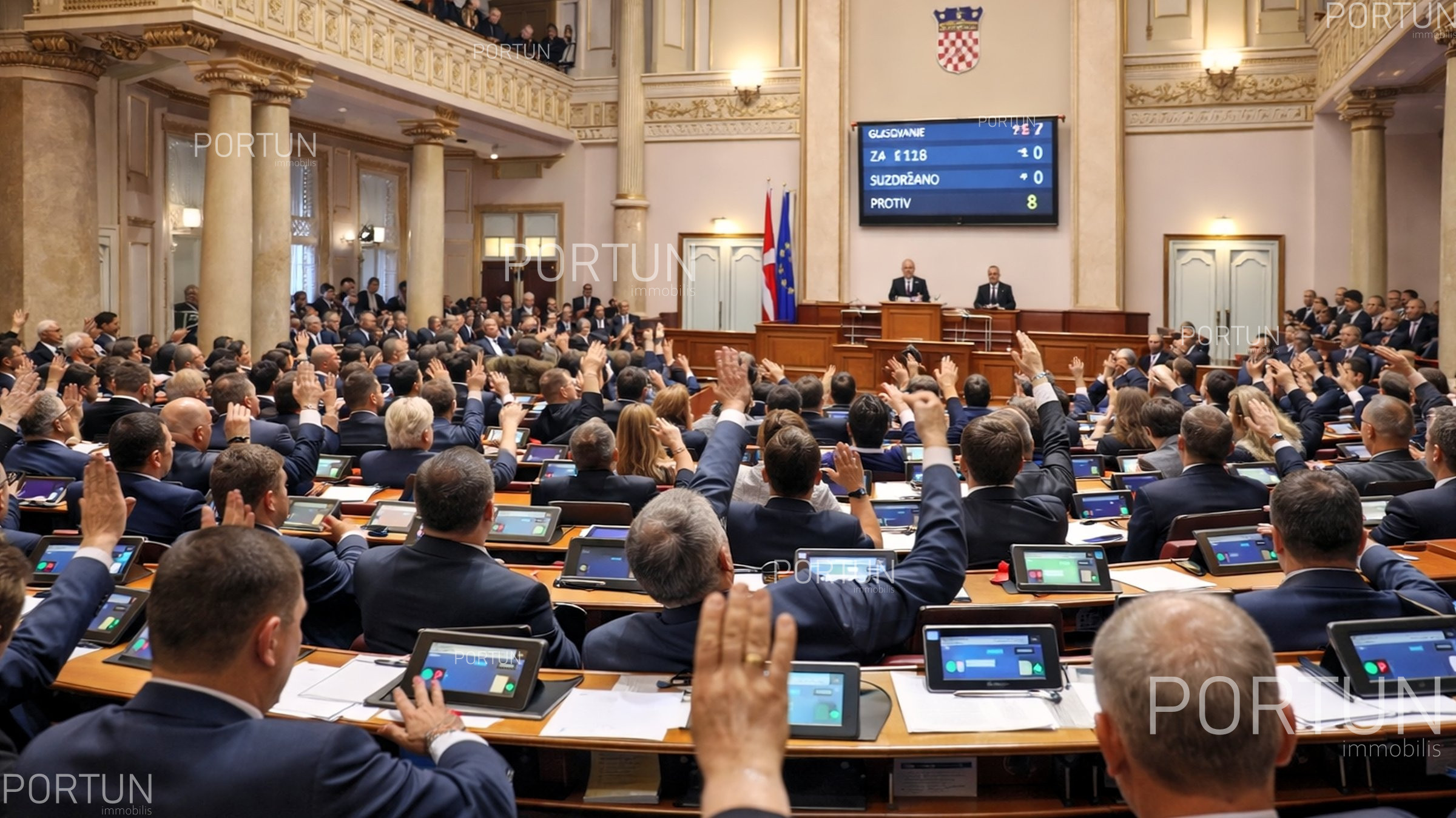
This year’s 40th Real Estate Business Forum in Zagreb once again confirmed that the Croatian real estate market is undergoing a period of significant transformation. Experts and institutional representatives discussed key factors that will shape market developments in the coming years, including financing conditions, legislative changes, the expanding role of renting, demographic challenges, and the strong influence of tourism on housing supply and prices. Additional emphasis was placed on the need for greater market transparency and professionalisation, actively promoted through the work of the HGK Real Estate Business Association and the continuous education of agents. More information on the sector’s activities is available on the official HGK website: Real Estate Business Association. The Forum thus served as a platform for exchanging insights and preparing the market for a new reality in which quality construction, buyer protection and regulatory compliance are stronger priorities than ever.Increase in Issued Building Permits
In 2024, building permits were issued for 20,405 residential units, representing an increase of nearly 9% compared to the previous year. This growth indicates a gradual rise in construction activity, although the market remains highly sensitive to changes in interest rates and demand dynamics. The highest number of permits in recent history was recorded in 2006, with 25,517 issued permits, while the lowest number was in 2015, with just 6,950 permits. The increased level of construction activity suggests an attempt to compensate for the shortage of new housing that has accumulated over the years. Experts anticipate that market stabilisation could encourage a more sustainable balance between demand and supply. At the same time, particular importance is placed on sustainable development and quality control to better meet the real needs of buyers.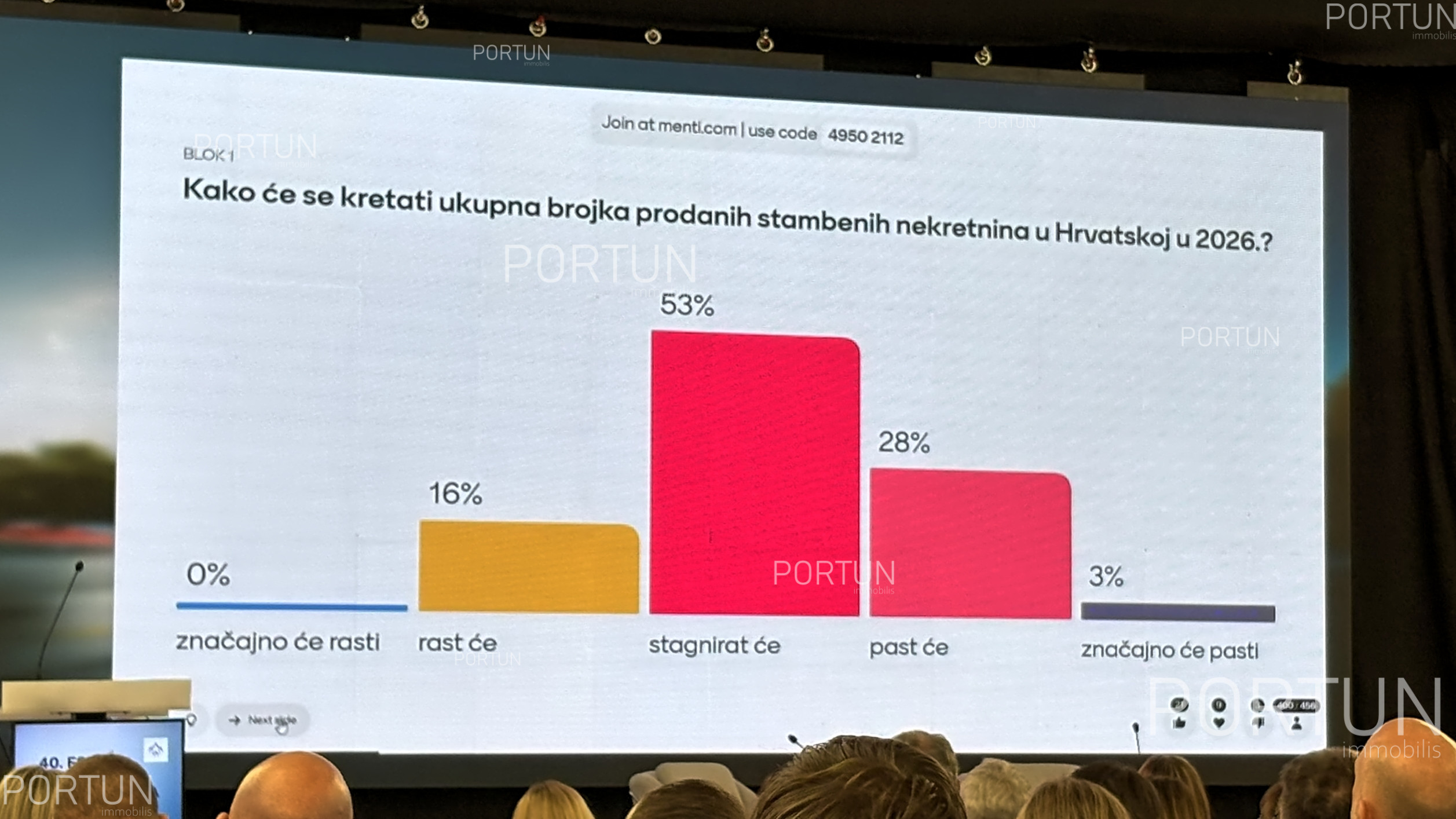
Housing Market Trends in 2024
The housing market experienced noticeable changes compared to the record year 2022, when 30,493 units were sold. In 2024, a total of 27,149 units were sold, with the Coastal Counties accounting for 47% of all transactions (12,815 units). Zagreb and Zagreb County followed with 9,444 units sold (35%), while the rest of Croatia accounted for 18%. Particularly significant is the fact that housing prices in Croatia have increased by an average of around 70% over the past 15 years, while some countries recorded much more dramatic surges—such as Estonia (228%), Hungary (304%) and Lithuania (175%). Meanwhile, certain markets have experienced price declines, including Italy and Cyprus. These figures highlight the strong interconnectedness of local markets with broader European trends, as well as the continued importance of location and supply in price formation.Foreign Buyers Remain Active
In 2024, approximately 31,128 residential properties (houses and apartments) were sold in Croatia, of which 11,638—or 37%—were purchased by foreign nationals. Although the record year remains 2022 with 35,454 transactions, the share of foreign buyers has remained stable. Slovenians accounted for the highest share (32%), followed by Germans (24%) and Austrians (11%). The northern Adriatic region—including Istria, Primorje-Gorski Kotar, Lika-Senj and Zadar counties—remains the primary area of interest for Slovenian buyers, while German buyers dominate in the central and southern Adriatic, as well as in Zagreb. In 2024, foreigners purchased the most properties in Istria (3,688 units), followed by Primorje-Gorski Kotar (2,235) and Zadar County (1,636). The City of Zagreb ranked only eighth with 110 transactions. These figures confirm that foreign buyers have a substantial influence on demand, prices and regional market trends across Croatia.Preliminary Data for 2025
A comparison of real estate transactions during January–June 2024 (67,414 transactions) and the same period in 2025 (57,095 transactions) reveals a decline of approximately 15%. The most significant decreases were recorded in Split-Dalmatia County (31%) and Primorje-Gorski Kotar County (27%), while Istria and Zagreb saw declines of around 20%. In the first half of 2024, 1,946 houses, 13,339 apartments, 12,616 building plots, 14,778 agricultural plots and 970 commercial properties were sold. In the same period in 2025, sales fell to 1,443 houses (-26%), 11,322 apartments (-15%), 9,987 building plots (-21%), 12,967 agricultural plots (-12%) and 767 commercial properties (-21%). These preliminary findings indicate a predictable slowdown driven by high interest rates, reduced purchasing power and cautious investor behaviour. At the same time, experts note that demand could remain stable in areas with strong tourism and high-quality development projects. In this context, local policies, urban planning and tax incentives will play a key role in determining the future direction of the market.Rapid Growth of Real Estate Agencies in Istria
The number of active real estate agencies in Croatia has grown markedly. From 2021 to 2024, the number increased from 1,080 to 1,174, and during 2025 it surged to as many as 1,510 registered entities. The highest concentration remains in Zagreb (446 agencies), followed by Primorje-Gorski Kotar County (274), Istria County (220) and Split-Dalmatia County (163). These figures do not include foreign agencies that also advertise and sell properties in Croatia. This rapid expansion highlights rising competition but also emphasises the need for differentiation through high-quality service, expert guidance, digital presentation and transparent communication. As a result, professionalisation, certification and trust are increasingly important success factors in a demanding market environment.Tags: real estate market, Zagreb Real Estate Forum, HGK, property statistics, housing Croatia, foreign buyers, Istria real estate